
|
I get a lot of emails from readers around the world asking for my help, advice or just a general diet specific question. All my readers’ stories touch me and I’m always doing my best trying to help.
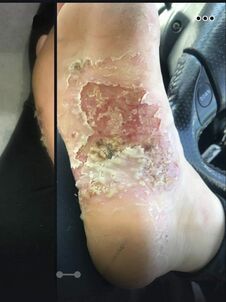
When Sophie contacted me early January this year she was in a very bad state and she had been in and out of the hospital a lot lately and her story affected me a bit more than normally. I deeply empathised with her and could feel her pain. Sophie told me she’s been suffering severely from the skin disease Palmoplantar Pustulosis for almost 2 years and have had no luck with any natural approach or biologics (biological therapy) . It had caused her a great deal of anxiety and depression and had affected her ability to work, walk, sleep, eat, basically to live a normal life at the age of 26. She was at her wits end as her PPP had now spread to her nails and she had developed wide spread psoriasis as well. This she told me had also affected her self-esteem which hadn’t been very good to begin with.
Her dermatologist was at his wits end as well telling Sophie she’s the most severe case he has ever seen. Sophie had picked up numerous infections and been in hospital a lot. She was unable to work as she couldn’t walk properly or use her hands. Showering was a nightmare due to the pain as she had deep slits in the skin on the palms of her hand and foot. She told me stress is a big part of her life and that she was trying to figure out how to manoeuvre her out of that as some of the stressful things was out of her control.
I told Sophie my story what I did to heal from Palmoplantar Pustulosis, how my focus had been to restore and improve my immune system by taking vitamin supplements, changing my diet and how I removed everything that was bad for me, including sugar, gluten, processed food and negative stress etc. My story did give her some hope and inspiration. By mid-January Sophie got another difficult infection from PPP. She ended up in hospital and had to have surgery as the result of the infection. Her whole arm had blown up swollen and she had huge lumps under her arms which meant the doctors had to cut her hand open and drain the pus. They gave her intravenous antibiotics which she was hesitant about as the antibiotics tend to kill the good bacteria in the body and not only the bad one. The good bacteria are crucial for our immune system to be able to work optimal. The reason for Sophie picking up so many infections was due to the immunosuppressants she was taking. One of these infections was continuous strep throat infections. The whole purpose with biologics is to make the immune system weak (calm) and to stop the immune system working on overload and attacking itself, which is the common factor in all autoimmune diseases. She was contemplating going off her biological and giving my way a go (the natural approach). She couldn’t see why she was going to go through all these lengths of building up her immune system when she was on a biological which at the same time severely weakens the immune system (suppresses it). Her dermatologist wasn’t ‘thrilled’ on the idea of her going of the biological as he thought it may exacerbate the PPP. He wanted her to do two more rounds of the biologic. In the end Sophie decided to do both, staying on the biologic as well as improving her health! So after getting out of the hospital and with a helping hand from her mother she took on her new lifestyle change. She stock up on supplements, colloidal silver water and loads of greens and good food. She cut out all the bad things, two of them being cigarettes and coffee, which how she normally would start of her day. Basically she went all in! Over the next few weeks she gradually started to become better and by the 20th of February her skin wasn’t perfect but it was way better than it used to be and she could walk normally again. After not hearing from Sophie for a few weeks, she sent me the below update on the 20th of March, her story of recovery, her story of hope. I’m so impressed by this young lady, her strength, her fighting spirit, her will to choose life and not to be a victim. Sophie I wish you all the best for the future, you deserve it! Your friend, Åsa Kärrman Sophie's Story of Hope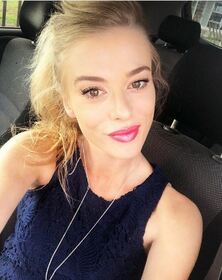 Sophie Sophie
As a lot of you know, I have been through one of the most challenging health,, conditions I have ever endured. One of the most difficult experiences I have endured alongside my recovery. Since being diagnosed with Palmoplantar pustular psoriasis in 2017 and battling it for 18 months. I had tried every single biological drug that New Zealand has on the market and every natural remedy out there, which resulted in no change and sadly longer vicious PPP cycles. I can now gratefully say that I am finally seeing results (touch wood) after trying a new biological drug that came into NZ late last year as well as changing my lifestyle to the best of my ability. I’m not perfect, I sometimes cave I am human after all. The long nights of constant itchiness and pain and losing the ability to use my hands and feet. The sleep deprivation, the feeling of hopelessness that came with lowered self-esteem, hospitalisation and unable to feel like a contributing member of society as I wasn’t able to work
Those that know me best know how much I struggled, listened to me vent and saw how hard I fought to battle such a hideous disease. A huge thank you to those people. ? Sadly I did lose hope and my mental health was affected. I went into one of the darkest places I have ever been in my life. A place I never thought I would come out of and in all honestly I didn’t want too. But finally I choose life and I continued to fight. I am so grateful for my dermatologist who has gone above and beyond to see me go into remission. My skin has been in remission for roughly 7 weeks and I so hope it will last. Just for today. I have to treat my skin condition with acceptance, taking it one day at a time, accepting what I cannot change however doing everything in my power to look after myself. For anyone that is struggling with a health condition, remain hopeful as tough as it is. I am living proof that you can get through it. The ramifications of my biological drug cause huge side effects, fatigue, migraines, constant strep throat, and countless infections including MRSA etc. But no joke I would prefer dealing with that than the skin disease that literally diminished my quality of life at 25. I did not realise how I took the simplest of things such as my hands and feet for granted until I was thrown this condition and on the flip side it has shown me how to cherish and love my body. Lesson learnt, one is always being taught something. This is the beauty of hindsight. I wouldn’t wish this condition upon anyone. I wouldn’t wish any health condition upon anyone. For anyone that is struggling my heart goes out to you because I know what it is like to feel ugly, to feel worthless, to feel useless, and to feel powerless. I hope my story can touch someone who is going through something similar. Please to anyone reading this don’t lose sight of hope. I did and it nearly cost me my life. Cherish your bodies, cherish the people around you because if the recent events have taught us anything. We have no idea what is around the corner and life really is too short Sophie
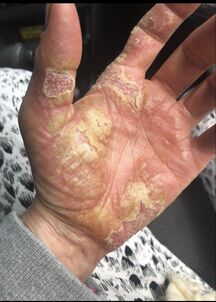
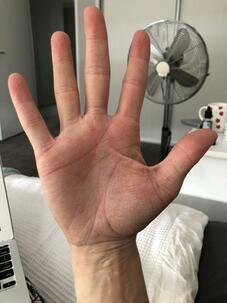
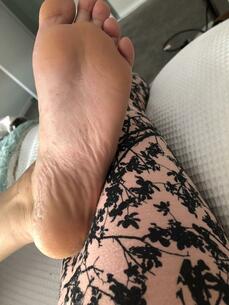
Sophie's before and after photos of her hand and foot
Update: 3 dec 2020
Since this post was written Sophie has come of her biologics and been healed from PPP for the last 3 months without taking the medication. She has more or less been following the AIP diet which proved to be successful in her case. Read More Palmoplantar Pustulosis Success Stories
11 Comments
Laura Williams
3/25/2019 04:25:52 am
Thank you. I have your book. I’m going to try laser on my feet. I haven’t had a cigarette in a week. My Parathyroids were all removed in 2017. My recent T4 is high. I’m on synthroid. I also have RA. After my last bout of cortisone my PPP flared up horrific on my right foot. The pain is horrible. I’m going to fight this as I cry when I look at my foot. My age is 63 and I have to work. I’m on so many meds for high blood pressure and high cholesterol depression and now this.
Åsa - Well-Healed
3/25/2019 10:34:51 pm
Hi Laura,
Kathryn
4/10/2019 03:26:52 am
Hi Asa,
Hi Kathryn,
Kathryn
4/24/2019 12:21:09 am
Asa,
Hi Kathryn,
Ashley
8/22/2020 05:41:20 pm
Thank you so much for sharing your story, Sophie! You are a beautiful young lady and I'm so sorry that this disease "got you" so early. I am a healthy 43 year old female and I have recently self diagnosed with PPP so we're in the early stages. Mine is very minor so far, though. I am trying to get it under control and hope that it doesn't get worse. So glad you got the pharm help that you needed and that it is working.
Jen Kohl
2/15/2022 03:18:39 am
did it stay mild? any advice welcome
Michele
12/7/2020 09:58:13 am
I have been ppp for over a year i would like to know if topical colloidal silver will help or just oral 8/5/2022 11:50:50 am
I thoroughly enjoyed this blog, thanks for sharing. Leave a Reply. |

If you want to heal your palmoplantar Pustulosis naturally, Do get a copy of my book where I teach in detail how to succeed and how to end up in remission long term.

Get my free booklet outlining the foods you can eat and which ones to avoid while healing from PPP . Enter your email address below and click subscribe.
1. Why is it so difficult to diagnose Palmoplantar Pustulosis? |
 RSS Feed
Disclaimer and privacy policy terms:
Read our GDPR privacy policy here
The information and advice published or made available through the www.well-healed.com web site is not intended to replace the services of a doctor nor does it constitute a doctor-patient relationship. Information on this web site is provided for informational and educational purposes only and is not a substitute for professional medical advice. You should not use the information on this web site for diagnosing or treating a medical or health condition. You should consult a physician in all matters relating to your health, and particularly in respect to any symptoms that may require diagnosis or medical attention. Any action on your part in response to the information provided in this web site is at the reader’s discretion. Readers should consult their own doctors or naturopaths concerning the information on this web site. www.well-healed.com makes no representations or warranties with respect to any information offered or provided on or through the www.well-healed.com web site regarding treatment, action, or application of medication or therapies. www.well-healed.com is not liable for any direct or indirect claim, loss or damage resulting from use of this web site and/or any web site(s) linked to/from it. Well Healed is a participant in the Amazon Services LLC Associates Program, an affiliate advertising program designed to provide a means for sites to earn advertising fees by advertising and linking to amazon.com.
Read our GDPR privacy policy here
The information and advice published or made available through the www.well-healed.com web site is not intended to replace the services of a doctor nor does it constitute a doctor-patient relationship. Information on this web site is provided for informational and educational purposes only and is not a substitute for professional medical advice. You should not use the information on this web site for diagnosing or treating a medical or health condition. You should consult a physician in all matters relating to your health, and particularly in respect to any symptoms that may require diagnosis or medical attention. Any action on your part in response to the information provided in this web site is at the reader’s discretion. Readers should consult their own doctors or naturopaths concerning the information on this web site. www.well-healed.com makes no representations or warranties with respect to any information offered or provided on or through the www.well-healed.com web site regarding treatment, action, or application of medication or therapies. www.well-healed.com is not liable for any direct or indirect claim, loss or damage resulting from use of this web site and/or any web site(s) linked to/from it. Well Healed is a participant in the Amazon Services LLC Associates Program, an affiliate advertising program designed to provide a means for sites to earn advertising fees by advertising and linking to amazon.com.