
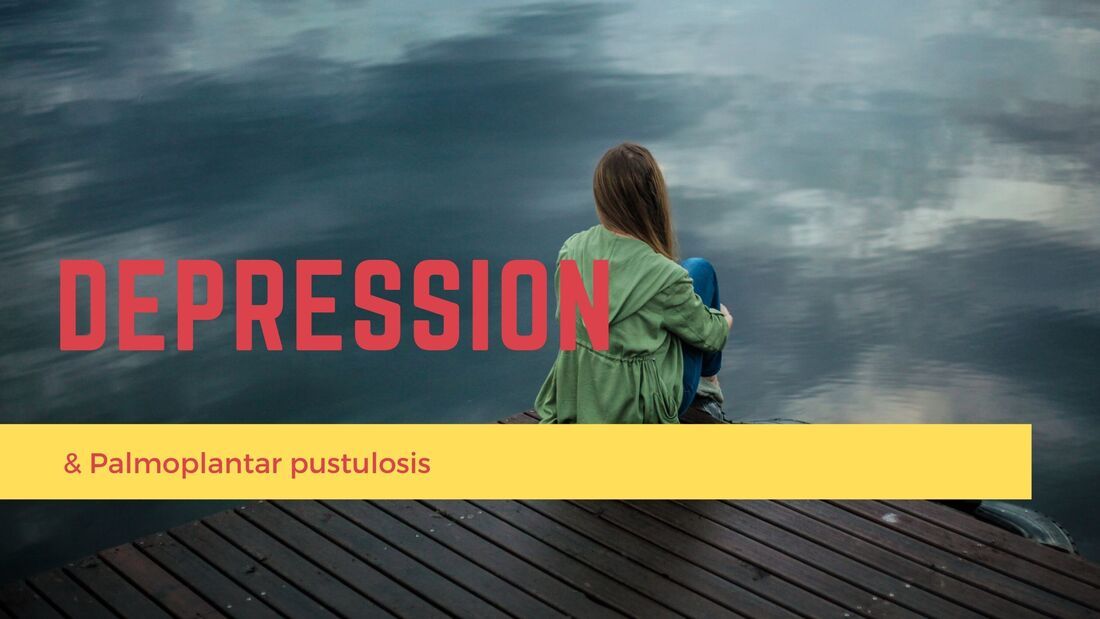
Talking to somebody else suffering from the same illness can be very supporting at times you feel you're on your own.
It doesn't have to be that way.
Dealing with Palmoplantar Pustulosis can make you feel depressed and very lonely at times, mainly because there's not a lot of people (if you think in percentage compare to population) who suffers from the skin disease PPP. Me for sure don't know anyone within my circle of acquaintances who has this disease.
According to this review, depression is the most common of the psychiatric disorders in patients with PPP, and a range between 13 and 28.8% are suffering from it. The feeling of loneliness often appears because something has triggered a memory of that feeling, not because you are in fact isolated and alone. The brain is designed to pay attention to pain and danger, and that includes the negative feelings you have around your own sickness, this is the reason loneliness gets our attention. Reaching out to other people in the same situation or reading their stories can be very helpful, as depression and loneliness is painful and can confuse you into thinking that you are on your own.
Due to the lack of understanding from friends and family I started to feel quite depressed dealing with this chronic disease on my own. By chance I stumbled across the website Inspire for support, which is a forum for people who suffer from all types of psoriasis including palmoplantar pustuloisis, the forum is presented by The National Psoriasis Foundation in the USA. During the time I was sick I found Inspire very supportive and helpful.
Since a year back we also have a global Facebook group which are growing quickly, it's a forum for friends, family and sufferers of Palmoplantar Pustulosis, where we are able to ask questions and to give support and advice to each other when there's a need to talk. I highly recommend joining our group. There's members in our group from all over the world who are able to give their personal advice and express their experiences how to deal with PPP and how to combat and reduce the autoimmune symptoms and causes. There's many of us who cleared our PPP by going down the alternative road by changing our diet and lifestyle around, us who had no luck with whatever our dermatologist previously been recommending. There are equally as many members writing about their experience with taking biologics, sharing both the positive and negative effects of taking these type of agents. My point is, being a member of a group is informative and helpful with so much knowledge gathered in one place, and when the feeling of loneliness is creeping up on you it's nice to know you are not on you own, it's nice to "meet" other people who totally understand which boat you're in. It was on Inspire I found a great thread about the miraculous effect vitamin D3 and K2 can have if you combine the two and take them together, this led me to do more research on the subject and came to realise how beneficial these 2 vitamins are for anyone suffering from PPP. According to a Swedish study people who suffer from PPP have a higher rate of calcium in the body compare to a healthy person. Most people do not have a shortage of calcium and for us PPP sufferers we tend to have too much calcium, which are ending up in the wrong places throughout the body due to the absence of other nutrients, especially of vitamin K2 and D3. When these vitamins are lacking, the calcium are transferred from the bones and are than stored at different locations in the connective tissue and especially in the arterial walls. This is called "calcium paradox", which means there is the lack of calcium in the bones and at the same time there's a surplus of calcium in other tissues, including blood vessels. When Calcium is stored in the vessel walls, they become both narrower and more rigid. The missing link is the lack of vitamin K2. I dig deeper on this subject in my book "How To Treat PPP Naturally" But going back to the original subject, apart from the support given in these groups, there are also a lot great information that will make you understand this skin disease a lot more. Do you find suffering from PPP makes you feel lonely? Do you have support and understanding from the ones closest by you? Please share your thoughts, Åsa Kärrman
4 Comments
Marie kärrman
10/20/2015 09:08:51 pm
6/15/2017 01:22:16 am
Hey Guys, 6/18/2017 06:45:33 pm
Hi Christian, Leave a Reply. |

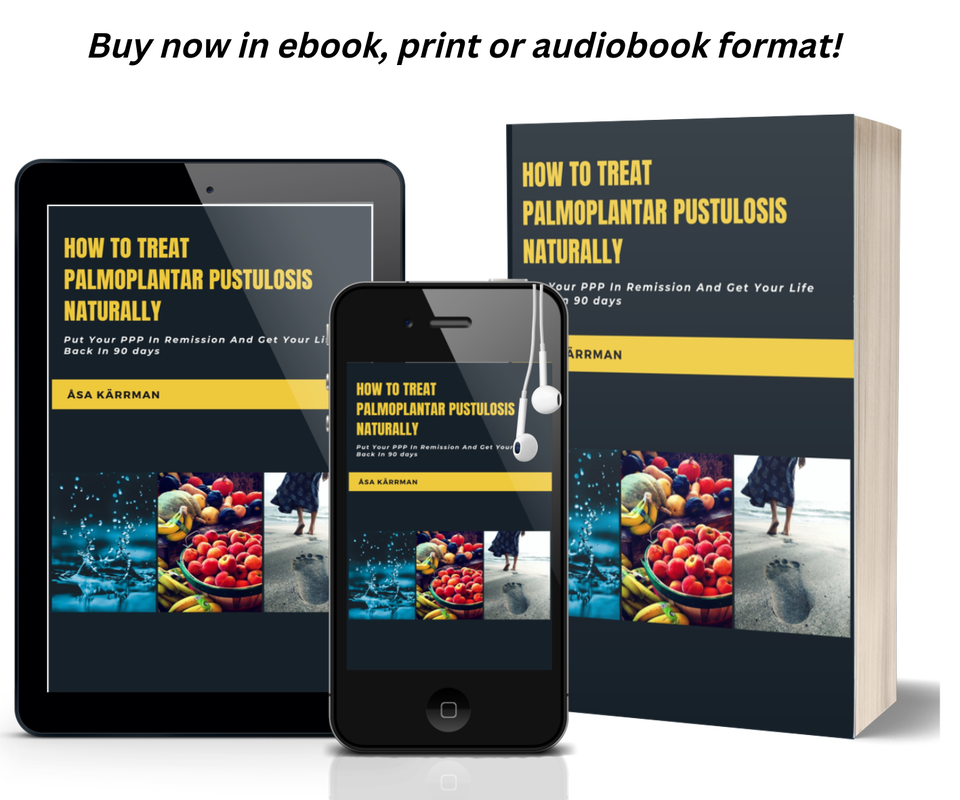
If you want to heal your palmoplantar Pustulosis naturally, Do get a copy of my book where I teach in detail how to succeed and how to end up in remission long term.

Get my free booklet outlining the foods you can eat and which ones to avoid while healing from PPP . Enter your email address below and click subscribe.
1. Why is it so difficult to diagnose Palmoplantar Pustulosis? |
 RSS Feed
Disclaimer and privacy policy terms:
Read our GDPR privacy policy here
The information and advice published or made available through the www.well-healed.com web site is not intended to replace the services of a doctor nor does it constitute a doctor-patient relationship. Information on this web site is provided for informational and educational purposes only and is not a substitute for professional medical advice. You should not use the information on this web site for diagnosing or treating a medical or health condition. You should consult a physician in all matters relating to your health, and particularly in respect to any symptoms that may require diagnosis or medical attention. Any action on your part in response to the information provided in this web site is at the reader’s discretion. Readers should consult their own doctors or naturopaths concerning the information on this web site. www.well-healed.com makes no representations or warranties with respect to any information offered or provided on or through the www.well-healed.com web site regarding treatment, action, or application of medication or therapies. www.well-healed.com is not liable for any direct or indirect claim, loss or damage resulting from use of this web site and/or any web site(s) linked to/from it. Well Healed is a participant in the Amazon Services LLC Associates Program, an affiliate advertising program designed to provide a means for sites to earn advertising fees by advertising and linking to amazon.com.
Read our GDPR privacy policy here
The information and advice published or made available through the www.well-healed.com web site is not intended to replace the services of a doctor nor does it constitute a doctor-patient relationship. Information on this web site is provided for informational and educational purposes only and is not a substitute for professional medical advice. You should not use the information on this web site for diagnosing or treating a medical or health condition. You should consult a physician in all matters relating to your health, and particularly in respect to any symptoms that may require diagnosis or medical attention. Any action on your part in response to the information provided in this web site is at the reader’s discretion. Readers should consult their own doctors or naturopaths concerning the information on this web site. www.well-healed.com makes no representations or warranties with respect to any information offered or provided on or through the www.well-healed.com web site regarding treatment, action, or application of medication or therapies. www.well-healed.com is not liable for any direct or indirect claim, loss or damage resulting from use of this web site and/or any web site(s) linked to/from it. Well Healed is a participant in the Amazon Services LLC Associates Program, an affiliate advertising program designed to provide a means for sites to earn advertising fees by advertising and linking to amazon.com.