Palmoplantar Pustulosis (PPP)
  • About Åsa
  • The Book
  • What is PPP?
    • FAQ
  • Photos of PPP
  • PPP Blog
  • Support
  • About Åsa
  • The Book
  • What is PPP?
    • FAQ
  • Photos of PPP
  • PPP Blog
  • Support
FAQ - Palmoplantar Pustulosis

FAQ – Palmoplantar Pustulosis: Causes, Triggers & Natural Recovery

Picture
​Living with Palmoplantar Pustulosis (PPP) can be frustrating and confusing. I know this first-hand, because I struggled with PPP for years before finding a way to heal naturally. To make things easier for you, I’ve put together this FAQ page where I answer the most common questions I receive about PPP. I hope my answers can save you time, reduce uncertainty, and give you hope.​
1. What is palmoplantar pustulosis?
Palmoplantar pustulosis (PPP) is a rare, chronic skin condition that causes recurring blisters filled with pus on the palms of the hands and the soles of the feet. It is not the same as psoriasis, but it shares some similarities.

2. What causes palmoplantar pustulosis?
The exact cause is unknown, but research suggests a combination of genetics, autoimmune dysfunction, and environmental triggers such as smoking, stress, infections, and certain medications.

3. Is palmoplantar pustulosis contagious?
No. PPP is not an infectious disease. You cannot catch it from someone else or pass it on through touch.

4. What are the symptoms of palmoplantar pustulosis?
The most common symptoms are painful pustules, red and scaly skin, cracked heels or palms, itching, and discomfort when walking or using the hands.

5. How is palmoplantar pustulosis diagnosed?
Diagnosis is usually made by a dermatologist through a physical examination, medical history, and sometimes a skin biopsy to rule out other skin conditions.

6. Can palmoplantar pustulosis be cured?
There is no permanent cure, but many people manage their symptoms successfully. Treatment focuses on reducing inflammation, preventing flare-ups, and supporting natural healing.

7. How is palmoplantar pustulosis treated?
Treatment options include topical steroids, phototherapy, biologics, or natural approaches like diet and lifestyle changes. The best method depends on individual triggers and severity.

8. What triggers palmoplantar pustulosis flare-ups?
Common triggers include smoking, alcohol, stress, gluten or processed foods, infections, and some medications. Identifying and avoiding personal triggers is key.

9. Does diet affect palmoplantar pustulosis?
Yes. Many patients report improvement by reducing gluten, dairy, sugar, and processed foods while focusing on anti-inflammatory diets rich in vegetables, omega-3s, and whole foods.

10. Who is most at risk of developing palmoplantar pustulosis?
PPP is more common in middle-aged women, smokers, and people with autoimmune conditions or a family history of psoriasis.

11. How long do palmoplantar pustulosis flare-ups last?
Flare-ups vary in length, but pustules can last for weeks before healing. Without proper management, new flare-ups may occur repeatedly.

12. Can palmoplantar pustulosis go into remission?
Yes. Many people experience long periods without symptoms, especially when triggers are avoided and overall health is supported.
How to treat palmoplantar pustulosis naturally
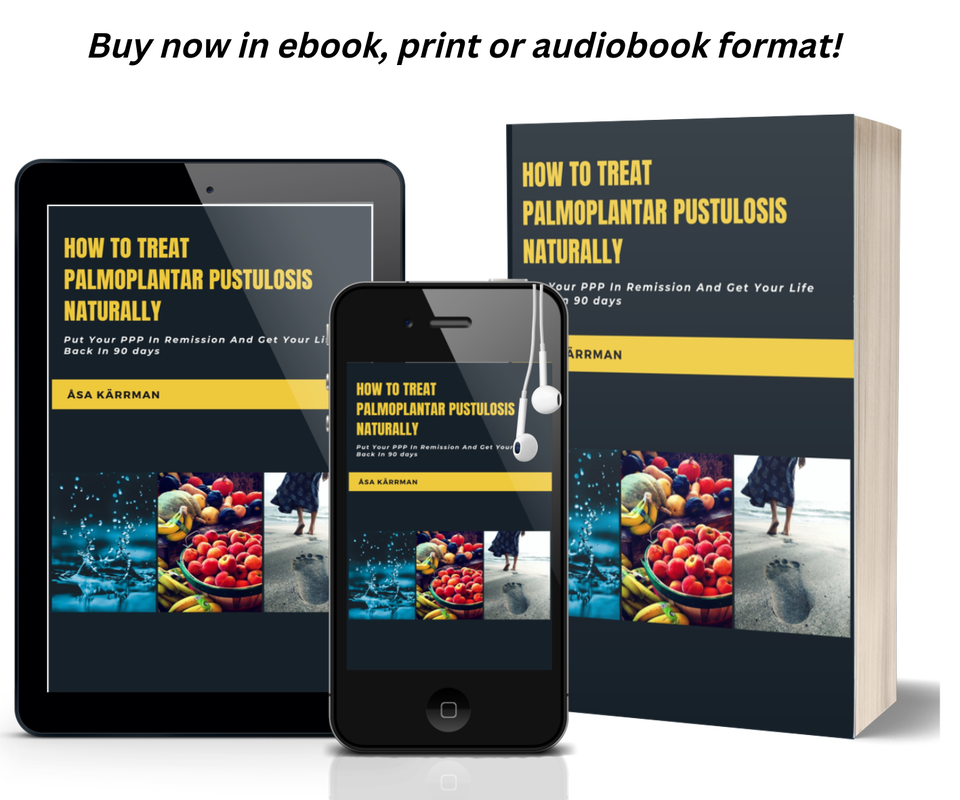
If you want to heal your palmoplantar Pustulosis naturally, Do get a copy of my book where I teach in detail how to succeed and how to end up in remission long term.

Picture
Amazon.com
Amazon.co.uk
Amazon.de
Amazon.fr
Amazon.es
Amazon.it
Amazon.co.jp
Amazon.com.br
Amazon.ca
Amazon.in
Amazon.com.au
Amazon.com.mx
Amazon.nl
Picture
If you didn’t find your question here, feel free to contact me. I’ve also shared my full healing journey in my book How to Treat Palmoplantar Pustulosis Naturally.

For more resources, visit:
Photos of PPP
What is PPP?

Disclaimer and privacy policy terms:
The information and advice published or made available through the www.well-healed.com web site is not intended to replace the services of a doctor nor does it constitute a doctor-patient relationship. Information on this web site is provided for informational and educational purposes only and is not a substitute for professional medical advice. You should not use the information on this web site for diagnosing or treating a medical or health condition. You should consult a physician in all matters relating to your health, and particularly in respect to any symptoms that may require diagnosis or medical attention. Any action on your part in response to the information provided in this web site is at the reader’s discretion. Readers should consult their own doctors or naturopaths concerning the information on this web site. www.well-healed.com makes no representations or warranties with respect to any information offered or provided on or through the www.well-healed.com web site regarding treatment, action, or application of medication or therapies. www.well-healed.com is not liable for any direct or indirect claim, loss or damage resulting from use of this web site and/or any web site(s) linked to/from it. Well Healed is a participant in the Amazon Services LLC Associates Program, an affiliate advertising program designed to provide a means for sites to earn advertising fees by advertising and linking to amazon.com.